
Introduction
In today’s rapidly evolving manufacturing industries, efficiency, accuracy, and consistency are more important than ever. Whether it’s automotive components, electronic parts, kitchen utensils, or complex industrial equipment, many of these products rely on a single essential technology—the press tool. This mechanical device plays a crucial role in shaping, cutting, bending, and forming sheet metal into precise and repeatable shapes. As industries push toward high productivity and automation, the demand for advanced press tools continues to rise.
If you are a manufacturer, engineer, or simply someone curious about industrial processes, understanding what a press tool is and how it works can give you valuable insight into modern production systems.
What Is a Press Tool
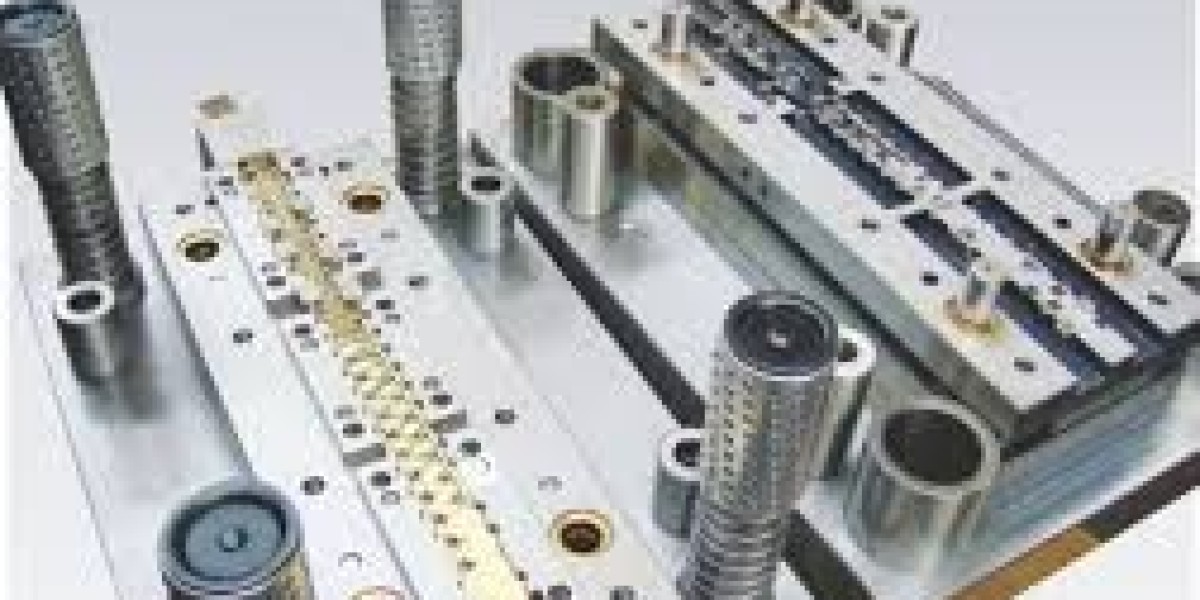
A press tool is a specialized mechanical device used in manufacturing to shape metal sheets through pressure. It operates inside a press machine, where a die and punch work together to cut or form the material. Depending on the function, a press tool can perform various operations such as blanking, piercing, bending, embossing, forming, and deep drawing.
Press tools are used across multiple sectors, including:
Automotive manufacturing
Aerospace engineering
Household appliances
Electronics
Medical equipment
Packaging industry
Every industry that relies on metal components depends heavily on press tools for high-volume, high-quality, and cost-effective production.
Types of Press Tools
Press tools come in several types, each designed for specific manufacturing needs. Understanding these types helps businesses choose the right tool for their production line.
Blanking Tools
Blanking tools cut the entire profile of a component from a sheet. This is typically the first step in producing a metal part. The output is known as a “blank.”
Piercing Tools
A piercing tool creates holes or slots within a sheet metal piece. In many cases, blanking and piercing tools are combined for efficiency.
Bending Tools
Bending tools are designed to bend sheet metal at precise angles. They are commonly used for brackets, enclosures, and structural parts.
Forming Tools
Forming tools shape the metal without cutting it. They are ideal for creating curved surfaces or complex geometries.
Progressive Press Tools
These tools contain multiple stations. With each stroke of the press machine, the workpiece advances from one station to the next, undergoing different operations until the final part is produced. Progressive tools are extremely efficient for high-volume production.
Compound Tools
Compound tools perform more than one operation—such as cutting and piercing—in a single stroke. This increases productivity and maintains dimensional accuracy.
Draw Tools
Draw tools are used for deep drawing processes where sheet metal is stretched into a desired shape, such as automotive body panels or kitchen sinks.
How a Press Tool Works
A press tool operates using two primary components:
Punch – The male part that applies force and penetrates the sheet.
Die – The female part that receives the punch and shapes the material.
The basic working process includes:
The sheet metal is fed between the punch and die.
The press machine applies force.
The punch moves downward, cutting or shaping the sheet.
The completed part either travels to the next station or is discarded.
The accuracy of this process depends on the quality of the tool, alignment, and material properties. Modern press tools integrate CNC machining, CAD/CAM design, and hardened materials to ensure long-lasting performance.
Applications of Press Tools
Press tools are used everywhere around us—even if we don’t notice. Some of the most common applications include:
Car doors, hoods, brackets, and body panels
Electrical switchboards and metal casings
Mobile phone frames and battery casings
Kitchen utensils such as pots, pans, and stainless-steel bowls
Industrial machinery parts
Aerospace structural components
Food packaging materials
Without press tools, today’s mass production and high-precision metal fabrication would be impossible.
Why Press Tools Are Essential in Modern Manufacturing
High Productivity
Press tools can produce thousands of identical parts with minimal downtime. This makes them ideal for mass production industries like automotive and electronics.
Superior Precision
Advanced press tools ensure tight tolerances, which is vital for safety-critical components.
Cost Efficiency
Once a press tool is manufactured, each part produced becomes extremely cost-efficient. This helps reduce overall production expenses.
Versatility
From thin sheet metals to high-strength alloys, press tools can work with a wide range of materials.
Durability and Longevity
High-quality press tools are made from hardened steels and carbide materials, ensuring they withstand high pressure over long operation cycles.
Modern Advancements in Press Tool Technology
With advancements in engineering and digital technology, press tools have become smarter, more durable, and more precise.
CAD/CAM Integration
Designers now use sophisticated 3D modeling tools to develop press tool designs with higher accuracy. CAM programs automate machining for consistent results.
CNC Machining for Tool Manufacturing
CNC machines produce punch and die components with exceptional precision, improving tool lifespan and performance.
High-Strength Materials
Carbide inserts, powder metallurgy, and advanced alloy steels improve tool hardness, reducing wear and maintenance costs.
Automation and Robotics
Many manufacturing lines now integrate robots for loading and unloading parts, reducing human error and increasing output.
Predictive Maintenance
Sensors and IoT-based technology can detect wear or misalignment in press tools before they cause downtime or defective products.
Choosing the Right Press Tool Supplier
When selecting a press tool manufacturer, consider:
Experience and expertise
Material selection
Tool design capability
Tool testing and quality assurance
After-sales support
Ability to handle customization
A reliable supplier ensures long-lasting tools and consistent product output.
conclusion
The press tool remains one of the most essential technologies in modern manufacturing. Its ability to shape, cut, and form metal with precision and efficiency makes it indispensable across industries.
See more our website:visit here