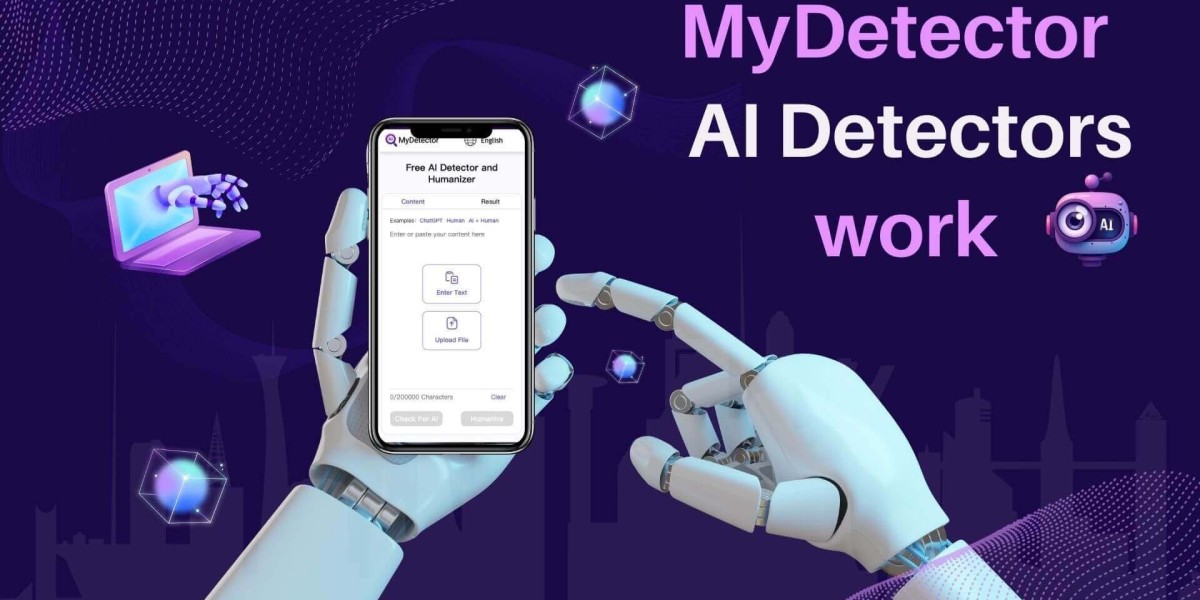

In today’s fast-paced digital landscape, artificial intelligence has become a silent architect behind everything we see — from the social media captions we like to the articles we read and even the emails we open. With AI’s powerful reach, a new question has emerged: How do we tell what’s human and what’s machine-made? This is where the Detector de IA steps into the spotlight, redefining digital authenticity.
A New Era of Digital Awareness
The term Detector de IA might sound futuristic, but its purpose is rooted in a very human need: trust. As artificial intelligence continues to generate text, images, music, and videos with uncanny precision, the lines between reality and simulation blur. People, companies, and educators worldwide are turning toward AI detection tools to separate genuine human creativity from algorithmic production.
Imagine reading a heartfelt essay or watching a moving film review — only to later learn that it was written by a machine. The emotional impact may fade, but the curiosity deepens. Who actually wrote it? The Detector de IA becomes the truth-teller in this digital equation.
The Engine Behind the Detector
Behind the sleek interface of every AI detector lies a symphony of advanced algorithms trained to analyze text patterns, linguistic flow, and statistical probabilities. Unlike plagiarism checkers that simply look for copied phrases, an AI detector studies how words are structured. It identifies rhythm, variation, and depth — elements that differ between human thought and AI generation.
Humans write with imperfection — pauses, quirks, and inconsistencies that add personality to our words. Artificial intelligence, no matter how advanced, often writes with mechanical perfection. The Detector de IA scans for these subtle signatures — too much balance, too little chaos — and draws conclusions about the origin of the text.
Beyond Academia and Journalism
While universities and newsrooms were among the first to adopt AI detectors to maintain integrity, the technology has quickly expanded into business, entertainment, and even government. Marketing agencies now rely on Detector de IA tools to ensure brand messages feel authentically human. Recruiters use them to verify job applicants’ writing samples, and online publishers deploy them to preserve the credibility of their platforms.
In short, AI detection is no longer a niche concern — it’s becoming a digital necessity.
The Ethical Balance
Yet, with great innovation comes new ethical questions. Should we always know when AI is behind the words? What if an artist uses AI for inspiration but still injects human emotion into the final piece? The Detector de IA walks a delicate line between protection and limitation.
Some argue that AI creativity deserves recognition in its own right. Others believe that transparency is non-negotiable. The key lies in balance — using detection not to punish, but to empower authenticity. Knowing what’s real doesn’t mean rejecting technology; it means embracing truth in a smarter way.
AI Detecting AI — The Paradox of the Future
As artificial intelligence evolves, so must the detectors that monitor it. We’re witnessing an unusual twist in technological history — AI is now being used to detect itself. The Detector de IA of tomorrow won’t just identify patterns; it will understand intent. It will distinguish between helpful automation and deceptive mimicry, between creative aid and full AI authorship.
Future detectors may also become more collaborative, working directly with AI systems to mark generated content transparently — like a digital watermark. This innovation could revolutionize how we view AI-generated material: not as counterfeit, but as clearly labeled contributions within our digital ecosystem.
Why the “Detector de IA” Matters for Everyone
For content creators, journalists, teachers, and everyday readers, the Detector de IA represents more than a tool — it’s a safeguard of originality. In a world where anyone can generate thousands of words with a single click, genuine voice becomes a treasure. The detector acts as a filter that keeps that treasure intact, ensuring that ideas remain rooted in authentic thought.
Moreover, it strengthens accountability. When people know their work might be verified by an AI detector, they’re more likely to engage in honest, human-driven creation. This cycle of awareness doesn’t suppress creativity — it refines it.
A Human Future with Artificial Intelligence
The story of the Detector de IA is not one of humans versus machines — it’s one of harmony. We’re entering an age where artificial intelligence enhances human potential, not replaces it. Detectors help define the boundaries of that relationship, allowing us to coexist with technology without losing our identity in the process.
Imagine a world where AI helps you write your ideas, but a detector ensures your voice remains yours. Imagine teachers guiding students to use AI responsibly, businesses building trust with transparency, and creators sharing art that blends machine precision with human soul. That’s the promise behind every Detector de IA — a promise of clarity in an age of complexity.
Final Thoughts
Artificial intelligence is rewriting the rules of creation, but the AI Detector ensures that the rules of truth still stand. It’s more than a piece of software; it’s a guardian of digital integrity, a partner in creativity, and a mirror reflecting the evolving relationship between human and machine.
As we continue to shape the future, one thing becomes clear — we don’t need to silence AI. We just need to recognize it. And in that recognition lies the power to preserve what’s most valuable: our authentic human expression.